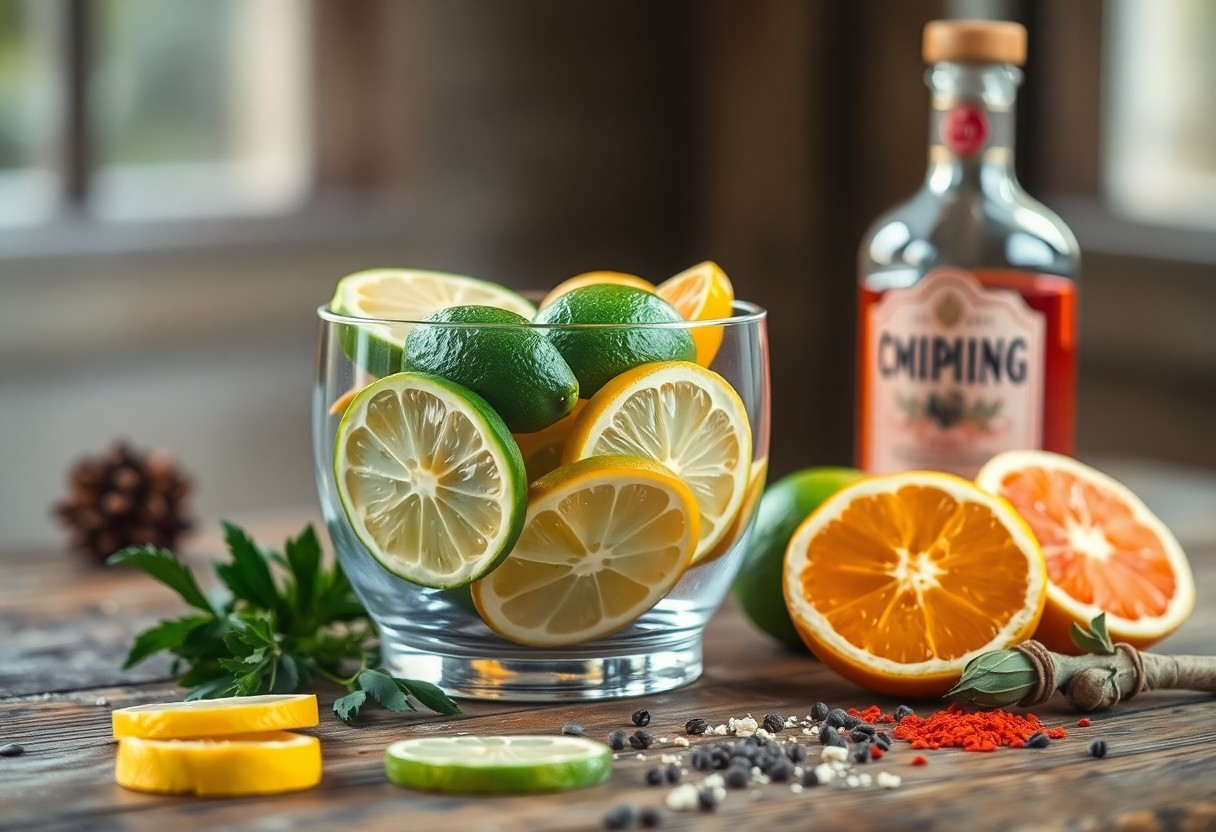
As you explore the world of culinary experimentation, you may stumble upon the intriguing combination of gin and citrus in marinades. Your curiosity is piqued, and you wonder what unique flavors this pairing can bring to your dishes. By incorporating gin and citrus into your marinades, you can unlock a depth of flavor that elevates your cooking to new heights, and in this post, you will discover the astonishing flavors that emerge from this unexpected yet fascinating combination.
The Botanical Dance of Gin
While exploring the world of gin, you’ll discover that its unique flavor profile is largely attributed to the combination of botanicals used in its production. As you research deeper, you’ll find that gin is more than just a spirit – it’s an intricate balance of aromas and flavors that come together to create a truly distinctive taste experience. Your journey into the world of gin will take you through a myriad of botanicals, each contributing its own distinct character to the final product. From the sweetness of licorice root to the bitterness of angelica, every element plays a vital role in shaping the flavor of your gin.
As you experiment with gin in your marinades, you’ll begin to appreciate the complexity of its botanical profile. You’ll notice how the different flavors interact with the citrus and other ingredients, creating a harmonious balance of tastes that elevate your dishes to new heights. Your understanding of gin’s botanicals will allow you to make informed decisions about which types of gin to use in your recipes, ensuring that you bring out the best in your ingredients. Whether you’re a seasoned chef or an adventurous home cook, your knowledge of gin’s botanical dance will undoubtedly enhance your culinary creations.
Core Aromatics and Essential Oils
Approximately, at the heart of every gin lies a combination of core aromatics and important oils that provide its foundation. You’ll find that these elements, such as coriander, orange peel, and cinnamon, are commonly used in gin production, each contributing its unique aroma and flavor to the spirit. As you explore different gins, you’ll notice how these core aromatics and important oils vary, resulting in a diverse range of flavor profiles that can be used to enhance your marinades. Your experimentation with these different gins will allow you to discover the perfect balance of flavors for your recipes.
Alongside the core aromatics, you’ll also encounter a variety of other botanicals that add depth and complexity to your gin. You might find that some gins feature floral notes, while others have a more pronounced spicy or herbal character. As you become more familiar with these different botanicals, you’ll be able to select the perfect gin to complement your ingredients, taking your dishes to new and exciting heights. Your understanding of the core aromatics and important oils will serve as a foundation for your exploration of the world of gin, allowing you to make informed decisions about which gins to use in your cooking.
Juniper’s Mysterious Role
Basically, by examining the role of juniper in gin production, you’ll gain a deeper understanding of what sets this spirit apart from others. You’ll discover that juniper berries are the primary botanical in gin, providing its distinctive flavor and aroma. As you explore different gins, you’ll notice how the level of juniper can vary, resulting in a range of flavor profiles that can be used to enhance your marinades. Your experimentation with these different gins will allow you to discover the perfect balance of flavors for your recipes, and you’ll find that juniper plays a significant role in shaping the character of your gin.
Generally, by understanding the mysterious role of juniper, you’ll be able to appreciate the complexity of gin’s flavor profile. You’ll find that juniper adds a unique, slightly bitter flavor that complements the sweetness of the citrus and other ingredients in your marinades. As you continue to experiment with gin, you’ll develop a deeper appreciation for the subtle nuances of juniper and its contribution to the overall flavor of your dishes.
To further appreciate the role of juniper in your gin marinades, consider the way it interacts with the other ingredients in your recipes. You’ll find that the bitterness of the juniper is balanced by the acidity of the citrus, creating a harmonious balance of flavors that elevates your dishes to new heights. As you continue to experiment with different gins and marinade recipes, you’ll develop a deeper understanding of how juniper contributes to the overall flavor profile, allowing you to make informed decisions about which gins to use in your cooking. Your knowledge of juniper’s mysterious role will serve as a key to unlocking the full potential of your gin marinades, and you’ll be able to create dishes that are truly greater than the sum of their parts.
Citrus Symphony
It is no secret that citrus fruits are a cornerstone of many marinades, and when combined with gin, they create a truly unique flavor profile. As you experiment with different types of citrus, you’ll discover that each one brings its own distinct character to the table. Your marinades will take on a new level of complexity, with notes of bright, citrusy freshness that complement the botanicals in the gin perfectly. Whether you’re using lemons, limes, oranges, or grapefruits, the possibilities are endless, and the resulting flavors will be nothing short of astonishing.
As you investigate deeper into the world of citrus-infused marinades, you’ll find that the type of citrus you choose can greatly impact the final flavor of your dish. You may find that you prefer the bold, tart flavor of lemons or the sweet, subtle taste of oranges. Whatever your preference, the key is to experiment and find the perfect balance of flavors to enhance your gin-based marinade. With a little practice, you’ll be creating dishes that are truly greater than the sum of their parts, with the citrus and gin working together in perfect harmony.
Varieties and Their Unique Profiles
For the adventurous chef, the variety of citrus fruits available is a treasure trove of flavors waiting to be explored. You can choose from a range of options, each with its own unique profile, from the tartness of lemons and limes to the sweetness of oranges and grapefruits. As you experiment with different types of citrus, you’ll discover that each one pairs differently with the botanicals in the gin, creating a wide range of flavor possibilities. Your goal is to find the perfect combination that enhances the natural flavors of your ingredients and adds a new level of depth to your dishes.
For instance, you may find that the brightness of lemon zest pairs perfectly with the juniper notes in the gin, while the sweetness of orange juice complements the more subtle botanicals. As you explore the different varieties of citrus, you’ll develop a deeper understanding of how each one interacts with the gin, allowing you to create marinades that are tailored to your specific needs. With practice, you’ll be able to coax out the full potential of your ingredients, creating dishes that are truly unforgettable.
Zest vs. Juice in Marination
An crucial consideration when working with citrus in your marinades is the decision of whether to use the zest or the juice. You’ll find that each has its own unique advantages and disadvantages, and the choice ultimately depends on the specific flavor profile you’re trying to achieve. The zest, with its concentrated oil glands, adds a intense, aromatic flavor to your marinades, while the juice provides a more subtle, acidic taste. As you experiment with different combinations of zest and juice, you’ll discover that the key is to find the perfect balance between the two.
Another important aspect to consider when using citrus in your marinades is the ratio of zest to juice. You may find that a combination of both works best, with the zest adding a burst of citrus flavor and the juice providing a more subtle, underlying taste. As you refine your techniques, you’ll develop a sense of how to balance these two elements to create marinades that are perfectly tailored to your needs. With a little practice, you’ll be able to unlock the full potential of citrus in your gin-based marinades, creating dishes that are truly exceptional.
Another factor to keep in mind is that the zest and juice can be used in different ways to achieve different effects. You can use the zest to add a burst of flavor at the beginning of the marination process, while the juice can be added later to enhance the overall flavor of the dish. As you experiment with different techniques, you’ll discover that the possibilities are endless, and the resulting flavors will be nothing short of astonishing. By mastering the use of zest and juice in your marinades, you’ll be able to create dishes that are truly greater than the sum of their parts, with the citrus and gin working together in perfect harmony.
The Chemistry of Flavor Marriage
Any exploration of the flavors that emerge from marinating with gin and citrus must begin with an understanding of the chemical processes at play. As you explore into the world of flavor marriage, you’ll discover that the combination of gin and citrus is a match made in heaven. The botanicals present in gin, such as juniper berries and coriander, complement the citrus flavors in a way that creates a truly unique taste experience. When you combine these ingredients, you’ll notice that the flavors begin to meld together, creating a harmonious balance of sweet and sour notes.
As you experiment with different marinade recipes, you’ll find that the key to unlocking the full potential of gin and citrus lies in the way the flavors interact with each other. This is where the concept of flavor marriage comes into play, and it’s imperative to understand the role that each ingredient plays in the process. By grasping the fundamental principles of flavor chemistry, you’ll be able to create marinades that are tailored to your specific tastes and preferences.
Alcohol as Flavor Carrier
Between the various components of a marinade, alcohol plays a significant role in carrying flavors into the food. As you work with gin, you’ll notice that it acts as a solvent, extracting the flavors and oils from the citrus and other ingredients. This process allows the flavors to penetrate deeper into the food, resulting in a more complex and nuanced taste experience. When you use gin as a flavor carrier, you’ll find that it enhances the overall flavor profile of your dish, adding a depth and richness that would be difficult to achieve with other ingredients.
Beyond its role as a flavor carrier, gin also contributes its own unique flavor profile to the marinade. The botanicals present in gin add a subtle complexity to the dish, with notes of juniper and coriander that complement the citrus flavors. As you experiment with different gin varieties, you’ll discover that each one brings its own distinct character to the table, allowing you to tailor your marinades to your specific tastes and preferences.
Time and Temperature Dynamics
About the time and temperature dynamics at play in the marinating process, you’ll find that these factors have a significant impact on the final flavor profile of your dish. The following table outlines the key considerations:
| Time | Temperature |
|---|---|
| 30 minutes to 2 hours | Room temperature |
| 2-4 hours | Refrigerator temperature |
| Overnight | Refrigerator temperature |
As you work with different marinade recipes, you’ll find that the time and temperature dynamics play a critical role in the flavor development process. By controlling these factors, you can influence the way the flavors interact with each other, resulting in a more balanced and harmonious taste experience.
Consequently, as you master the art of marinating with gin and citrus, you’ll discover that the time and temperature dynamics are imperative to achieving the perfect flavor profile. The following table provides a summary of the key considerations:
| Marinating Time | Temperature |
|---|---|
| Short marinating times | Room temperature |
| Long marinating times | Refrigerator temperature |
By understanding the interplay between time, temperature, and flavor, you’ll be able to create marinades that are tailored to your specific needs and preferences, resulting in dishes that are truly greater than the sum of their parts.
Protein Interactions
Once again, you find yourself exploring the vast world of marinades, and this time, you’re delving into gin and citrus. As you experiment with these flavors, you’ll notice that the type of protein you’re using plays a significant role in the final outcome. Your choice of protein will determine how the flavors of the gin and citrus meld together, creating a unique taste experience. You’ll begin to appreciate the complexity of the interactions between the protein and the marinade, and how they enhance the overall flavor profile of your dish.
As you continue to experiment with different proteins, you’ll discover that the acidity in the citrus helps to break down the proteins, making them more tender and receptive to the flavors of the gin. This process allows you to create a wide range of dishes, from delicate fish to hearty meats, all infused with the bright, citrusy flavor of your gin and citrus marinade. You’ll be able to tailor your recipes to suit your tastes, using the protein interactions to your advantage and creating dishes that are truly unique and delicious.
Fish and Seafood Transformations
After mastering the basics of protein interactions, you can move on to exploring the specific effects of gin and citrus on fish and seafood. You’ll find that the delicate flavors of these proteins pair perfectly with the bright, citrusy notes of the marinade, creating a truly refreshing taste experience. Your dishes will take on a light, airy quality, with the gin and citrus working together to enhance the natural flavors of the fish and seafood. As you experiment with different types of fish and seafood, you’ll discover the unique characteristics of each and how they respond to the marinade.
As you research deeper into the world of fish and seafood, you’ll begin to appreciate the subtle nuances of the gin and citrus marinade. You’ll learn how to balance the flavors to bring out the best in your protein, creating dishes that are both delicate and flavorful. Your repertoire will expand to include a wide range of fish and seafood dishes, each one showcasing the unique properties of the gin and citrus marinade and your skill as a chef.
Meat and Poultry Applications
One of the most exciting aspects of working with gin and citrus is the opportunity to experiment with meat and poultry. You’ll find that the bold flavors of these proteins pair perfectly with the bright, citrusy notes of the marinade, creating a truly robust taste experience. Your dishes will take on a rich, complex quality, with the gin and citrus working together to enhance the natural flavors of the meat and poultry. As you explore the world of meat and poultry, you’ll discover the unique characteristics of each and how they respond to the marinade.
One of the key benefits of using gin and citrus with meat and poultry is the ability to add depth and complexity to your dishes. You’ll be able to create a wide range of flavors, from the bright, citrusy notes of a gin and lemon marinade to the rich, herbal flavors of a gin and orange marinade. As you experiment with different types of meat and poultry, you’ll begin to appreciate the versatility of the gin and citrus marinade and the many ways it can be used to enhance your cooking.
In fact, as you continue to explore the world of meat and poultry, you’ll discover that the gin and citrus marinade can be used to create a wide range of dishes, from hearty stews and braises to quick and easy grilled meats. You’ll be able to tailor your recipes to suit your tastes, using the unique properties of the gin and citrus to add flavor and depth to your cooking. With practice and experimentation, you’ll become proficient in the art of using gin and citrus with meat and poultry, and your dishes will take on a new level of sophistication and complexity.
Complementary Ingredients
Unlike other marinades, combining gin and citrus offers a unique flavor profile that can be elevated with the right complementary ingredients. As you experiment with this marinade, you’ll find that certain ingredients enhance the flavors of the gin and citrus, creating a harmonious balance of tastes. Your choice of ingredients will depend on the type of dish you’re preparing, but some ingredients pair particularly well with the botanicals found in gin and the brightness of citrus. By selecting the right complementary ingredients, you can create a dish that is greater than the sum of its parts.
As you consider the ingredients to pair with your gin and citrus marinade, think about the flavors you want to emphasize. You may want to enhance the herbal notes of the gin or the acidity of the citrus. Alternatively, you may want to add a richness or depth to the dish. Whatever your goal, there are several ingredients that can help you achieve it. In the following sections, we’ll explore some of the herbs, spices, and flavor combinations that complement gin and citrus, and provide you with the inspiration you need to create your own unique dishes.
Herbs and Spices That Enhance
Herbal notes are a key component of gin, and pairing the spirit with complementary herbs can enhance its flavor. You can use herbs like rosemary, thyme, or parsley to add a fragrant, aromatic flavor to your dish. These herbs pair well with the botanicals found in gin, and can help to create a cohesive flavor profile. As you experiment with different herbs, you’ll find that some pair better with certain types of citrus than others. For example, rosemary and lemon is a classic combination that works well in many dishes.
Spices can also be used to enhance the flavor of your gin and citrus marinade. You can use warm spices like cinnamon, nutmeg, or cardamom to add depth and complexity to the dish. These spices pair well with the sweetness of the citrus and the botanicals of the gin, creating a balanced and harmonious flavor profile. As you experiment with different spices, you’ll find that some add a subtle warmth to the dish, while others provide a more pronounced flavor.
Balance of Sweet and Bitter Notes
On the palate, the balance of sweet and bitter notes is vital to creating a harmonious flavor profile. You want to balance the sweetness of the citrus with the bitterness of the gin, creating a flavor experience that is both refreshing and complex. As you taste your dish, you’ll want to adjust the balance of sweet and bitter notes to achieve the perfect harmony. This can be done by adding more citrus, gin, or other ingredients to the marinade.
For instance, if you’re using a sweet and tangy citrus like orange or grapefruit, you may want to balance its sweetness with a bitter ingredient like bitter melon or arugula. Alternatively, if you’re using a bitter gin with a strong botanical flavor, you may want to balance its bitterness with a sweet ingredient like honey or sugar. By adjusting the balance of sweet and bitter notes, you can create a dish that is both refreshing and complex, with a flavor profile that is uniquely your own.
Techniques and Timing
Now that you have decided to experiment with marinating using gin and citrus, it’s important to understand the techniques and timing involved in this process. You will need to consider the type of ingredients you are using, the flavor profile you want to achieve, and the amount of time you have available for marination. As you investigate into the world of gin and citrus marination, you will discover that the possibilities are endless, and the right techniques and timing can make all the difference in the outcome of your dish.
As you explore the world of marinating with gin and citrus, you will encounter various techniques and methods that can enhance the flavor and texture of your ingredients. You can experiment with different types of gin, citrus fruits, and spices to create unique and complex flavor profiles. The key to successful marination is to find the right balance between the ingredients and the timing, and this is where the art of marination comes into play.
Short vs. Long Marination
Betwixt the various marination methods, you will find that the duration of marination plays a significant role in the final outcome of your dish. You can choose between short marination times, which are ideal for delicate ingredients, and long marination times, which are better suited for tougher ingredients. When you opt for short marination, you can expect to marinate your ingredients for anywhere from 30 minutes to a few hours, while long marination can take anywhere from several hours to several days.
Between these two extremes, you will find that the marination time will depend on the type and quantity of ingredients, as well as the desired level of flavor penetration. You can experiment with different marination times to find the perfect balance for your dish, and you will soon discover that the right timing can make all the difference in the flavor and texture of your ingredients.
Temperature Considerations
Between the various factors that affect marination, temperature is one of the most important considerations. You will need to decide whether to marinate your ingredients at room temperature, in the refrigerator, or in a temperature-controlled environment. The following table outlines the effects of different temperatures on marination:
| Temperature | Effect on Marination |
|---|---|
| Room Temperature | Faster marination, increased risk of spoilage |
| Refrigerator | Slower marination, reduced risk of spoilage |
| Temperature-Controlled Environment | Precise control over marination, optimal flavor development |
This table highlights the importance of temperature in marination, and you can use this information to determine the best temperature for your specific needs. You will find that the right temperature can enhance the flavor and texture of your ingredients, while the wrong temperature can lead to spoilage or uneven marination. The following table provides more information on temperature considerations:
| Ingredient | Recommended Temperature |
|---|---|
| Delicate Fish | Refrigerator |
| Tough Meats | Room Temperature or Temperature-Controlled Environment |
| Vegetables | Room Temperature or Refrigerator |
Final Words
Conclusively, as you probe into the world of marinating with gin and citrus, you will discover a plethora of unfathomable flavors that will elevate your culinary creations to new heights. You will find that the botanicals present in gin, such as juniper berries and coriander, complement the bright, citrusy notes of lemons, limes, or oranges, resulting in a harmonious balance of flavors. As you experiment with different combinations of gin and citrus, you will uncover a wide range of flavor profiles, from the subtle and refreshing to the bold and complex, allowing you to tailor your marinades to suit your unique tastes and preferences.
As you continue to explore the possibilities of marinating with gin and citrus, you will develop a deeper understanding of how these ingredients interact with your chosen proteins or vegetables, and how they enhance the overall dining experience. You will learn to appreciate the way the citrus helps to break down the connective tissues in meats, while the gin adds a depth and richness to the flavor profile. By mastering the art of marinating with gin and citrus, you will be able to create dishes that are not only delicious but also visually stunning, with the vibrant colors and aromas of the citrus and gin combining to create a truly unforgettable culinary experience, one that will leave your guests impressed and eager for more of your creative creations.
Leave a Reply